
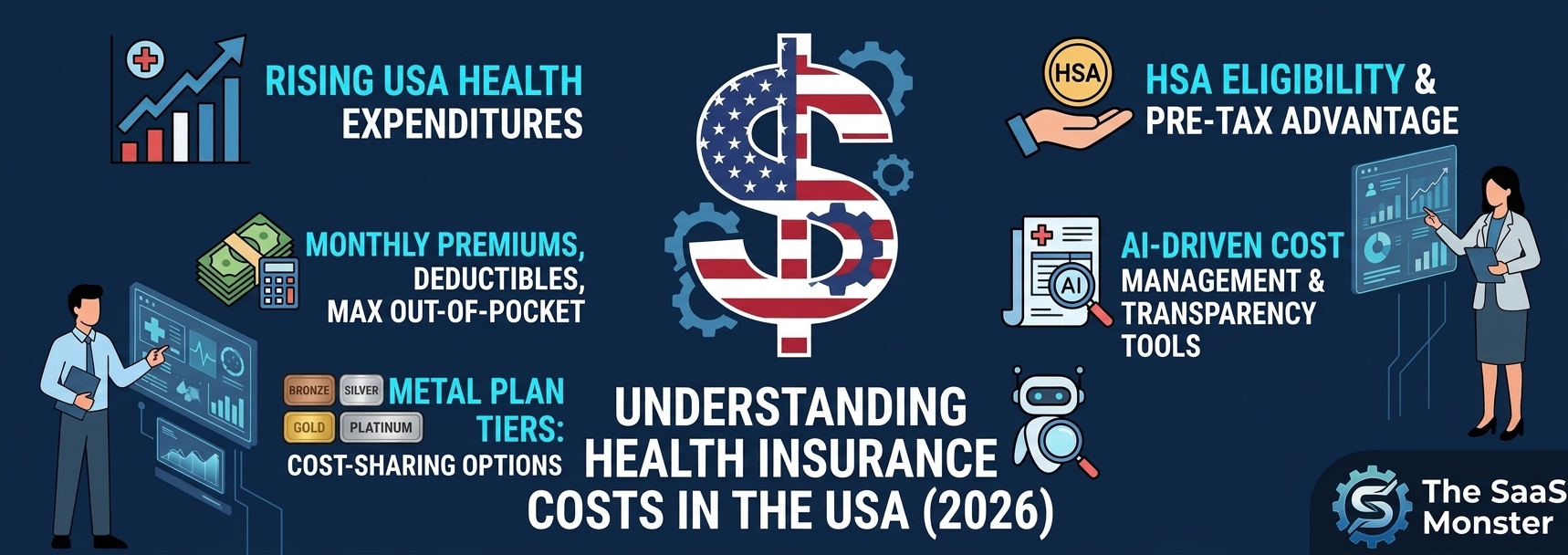
Navigating the healthcare system in the United States often feels like solving a complex financial puzzle. With healthcare expenditures continuing to rise, understanding why insurance is so costly—and how policyholders can manage these expenses—is vital for individuals, families, and business owners alike.
1. Why is Health Insurance So Costly in the US?
Unlike many developed nations that utilize single-payer or heavily regulated universal healthcare systems, the US relies primarily on a privatized, multi-payer market structure.
-
Unregulated Service Pricing: Hospitals, pharmaceutical companies, and specialist networks set their own pricing structures, leading to vast price variations for identical procedures.
-
Administrative Complexity: Managing billing across thousands of private insurance providers, Medicare, and Medicaid creates immense administrative overhead for healthcare systems.
-
High Prescription Drug Costs: The US market allows pharmaceutical manufacturers to set market prices for brand-name and specialty drugs, driving up overall claims expenditures.
2. Average Costs Breakdown
To understand the true cost of insurance, policyholders must look beyond the monthly premium to out-of-pocket maximums and deductibles.
-
Monthly Premiums: Individual plans on public ACA exchanges or employer-sponsored coverage range from hundreds to over a thousand dollars per month, depending on age, location, and coverage tier.
-
Annual Deductibles: High-Deductible Health Plans (HDHPs) frequently require policyholders to pay $3,000 to $6,000 out-of-pocket before standard coverage kicks in.
-
Co-pays & Co-insurance: Even after reaching a deductible, policyholders usually pay a fixed fee or percentage (often 20%) for specialist visits, diagnostic imaging, and prescriptions.
3. Metal Tiers and Coverage Options
The Affordable Care Act (ACA) categorizes individual and small-group plans into four primary metal tiers based on cost-sharing ratios:
-
Bronze: Lowest monthly premiums, but highest out-of-pocket costs when receiving care (covers ~60% of average costs).
-
Silver: Balanced premiums and deductibles; eligible for income-based cost-sharing reductions (covers ~70% of average costs).
-
Gold: Higher monthly premiums with significantly lower deductibles and copays (covers ~80% of average costs).
-
Platinum: Highest monthly premiums with minimal deductibles and very low out-of-pocket expenses (covers ~90% of average costs).
4. Strategies to Manage Insurance Costs
While insurance remains a major expense, policyholders can optimize their healthcare spending through strategic planning:
-
Health Savings Accounts (HSAs): Pairing a High-Deductible Health Plan with an HSA allows individuals to contribute pre-tax dollars to pay for qualified medical expenses tax-free.
-
Premium Subsidies: Depending on household income, many individuals qualify for ACA tax credits that directly lower monthly premium costs.
-
Supplemental Insurance: Adding low-cost voluntary plans—such as critical illness or accident coverage—helps cover steep deductible gaps in the event of unexpected emergencies.
5. Modern AI Innovations in US Healthcare Billing
Technology is playing an increasingly critical role in mitigating unnecessary healthcare expenses:
-
Automated Claims Auditing: AI-driven platforms scan medical bills for duplicate charges, incorrect billing codes, and overcharges before payment.
-
Price Transparency Tools: Machine learning algorithms aggregate regional pricing data, allowing patients to compare out-of-pocket costs for procedures across local facilities.
-
Predictive Care Management: Telehealth and remote monitoring tools use predictive analytics to address health issues early, reducing costly emergency room visits.
The SaaS Monster Verdict
While US health insurance represents a substantial financial commitment, understanding coverage mechanics, taking advantage of pre-tax accounts like HSAs, and leveraging modern digital transparency tools can significantly soften the financial impact. Balancing appropriate premium levels with manageable deductibles remains the key to long-term financial stability.